
Updates
on everything Geocodio
FFIEC Append Updated to 2025 Dataset
Geocodio’s FFIEC data append now returns data from the 2025 FFIEC flat file.
What’s Changed in the FFIEC Append?
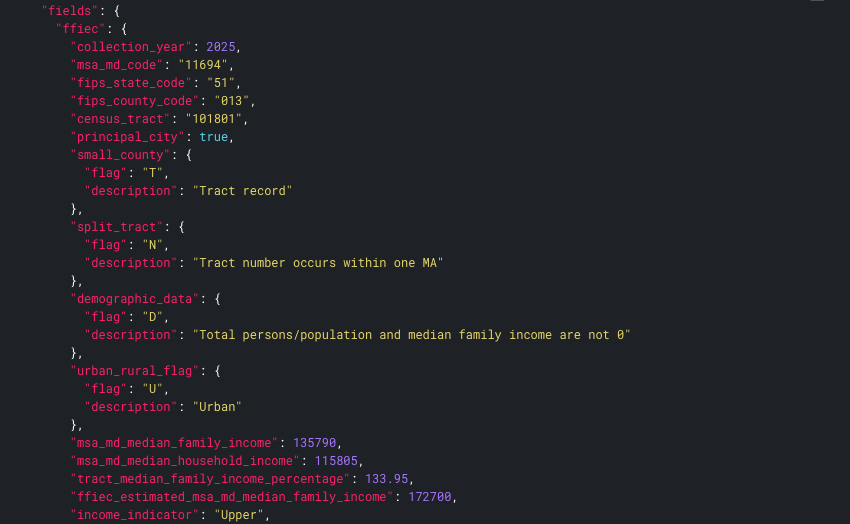
We've updated our FFIEC data append from the 2024 FFIEC Census dataset to the 2025 dataset. This means all FFIEC lookups, through the API or Spreadsheet Uploader, now return 2025 data by default.
The 2025 FFIEC Census flat file was released by the FFIEC on July 10, 2025.
As you might expect, some addresses may now fall in different Census tracts compared to the 2024 dataset because the 2025 dataset uses updated Census boundaries. We recommend reviewing the FFIEC's documentation for details on what changed between releases.
What Does This Mean for You?
If you're using the FFIEC data append for HMDA, CRA, or other fair lending compliance work, your FFIEC-enriched results from Geocodio will now reflect the most current FFIEC data, including updated:
MSA/MD median family incomes
Income level designations
CRA distressed/underserved tract criteria
Beyond fair lending compliance, the FFIEC data append is also valuable for organizations in real estate, non-profits, and other sectors.
The income level designations (low, moderate, middle, and upper) provide a straightforward way to understand the economic profile of any Census tract in the US, no calculations needed. Whether you're a real estate company analyzing neighborhood income levels, a non-profit targeting services to lower-income areas, or a researcher segmenting geographies by economic characteristics, the FFIEC income indicator gives you a ready-made income classification for every tract, updated annually.
How to Get the New FFIEC Data
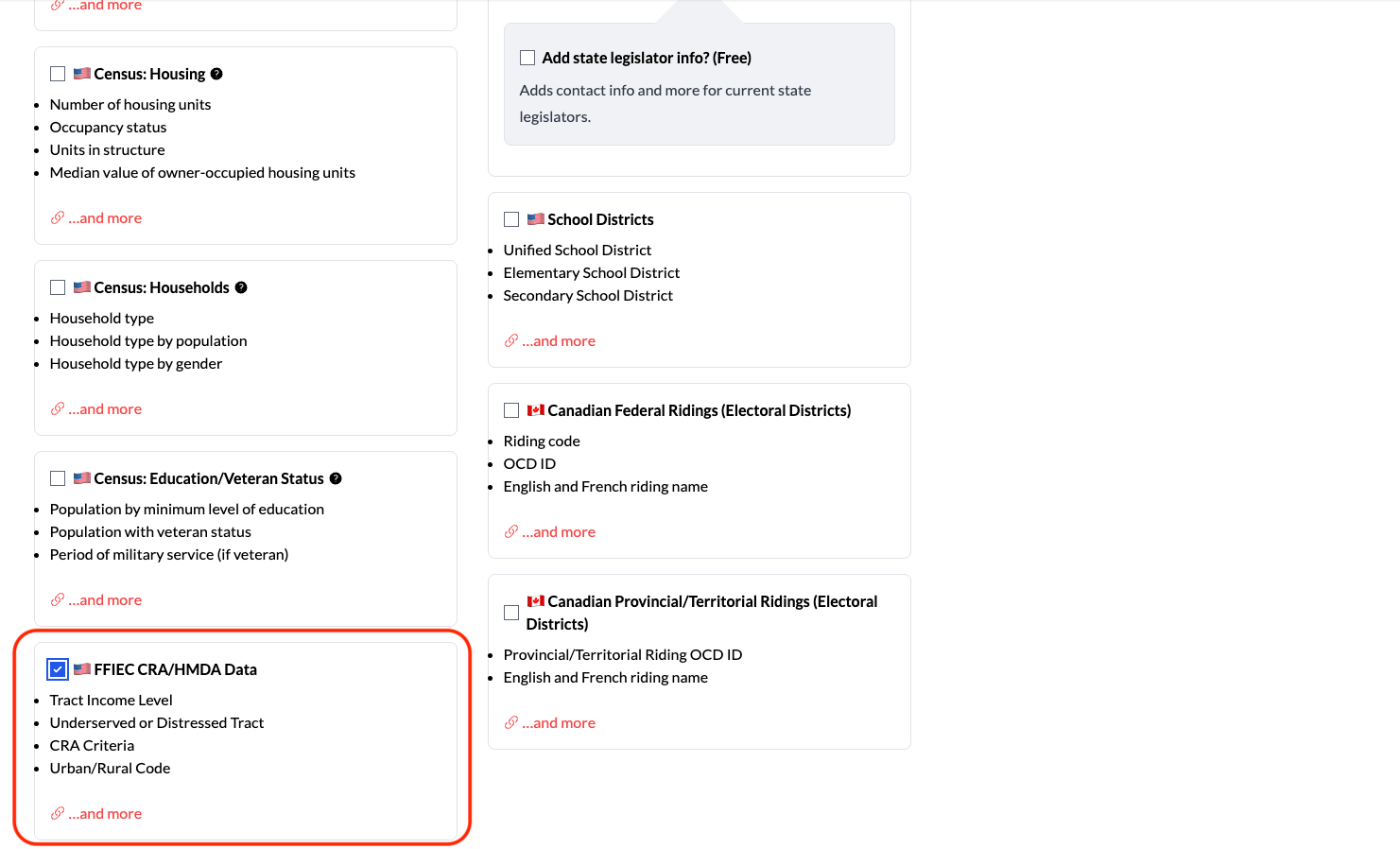
No changes are needed on your end. As of API v.1.10, the FFIEC data append will automatically return 2025 data going forward. Just include ffiec in the fields parameter of your API request or select "FFIEC CRA/HMDA Data" in Step 3 (Data Appends) of the spreadsheet upload process.
For more details on the available datapoints and how the append works, check out our FFIEC Guide and the API Docs.
Our support team is happy to answer any questions about the FFIEC append or any other data enrichment topic. Reach out to us at [email protected].
Don't miss what's new
Geocodio ships new features and data updates regularly. We'll only email you with the good stuff, nothing else.
Thanks for subscribing! Check your inbox to confirm.